

Why These Photography Locations Worth Exploring in Slovenia This Autumn?
These seven locations bring together the variety I encountered during my October 2026 photography trip to Slovenia: lakes, hilltop churches, vineyards, alpine scenery and historic towns. Together, they offer different ways to photograph autumn, from intimate scenes softened by mist to wider views shaped by seasonal color and changing light.
This guide follows places I personally visited and photographed. Each location includes a photograph from my trip, a Google Maps reference, recommended times and seasons, and practical information to help you plan your visit.
01 — Lake Bled
Recommended time:
Before sunrise and during
the first morning light
Recommended season:
Autumn for foliage and atmospheric conditions.
Location: View on Google Maps
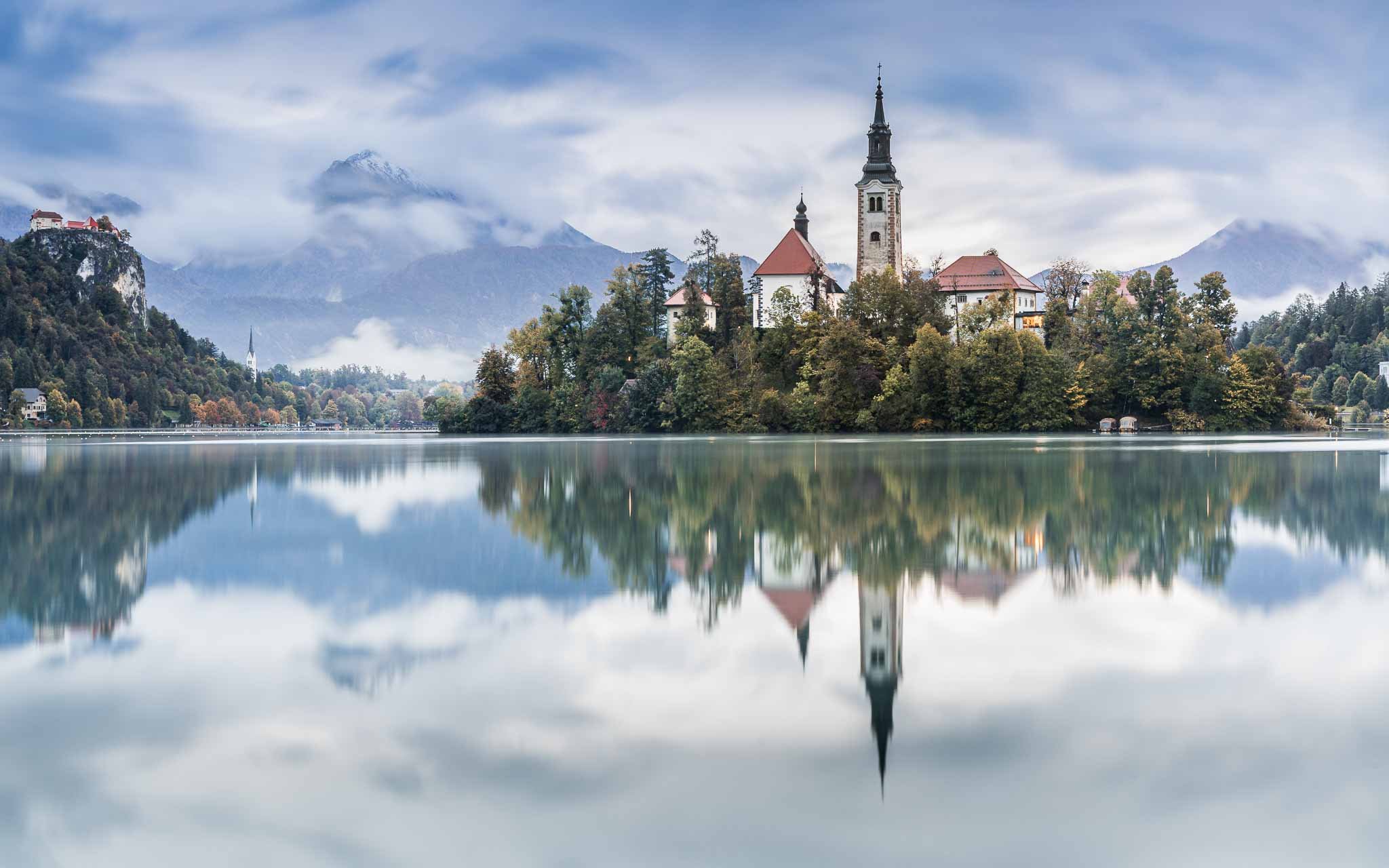
Lake Bled’s island church provides a distinct focal point within a landscape of water, wooded slopes and distant mountains. In autumn, changing foliage adds color along the shoreline, while mist can soften the background and alter the scene from one moment to the next.
The photograph above brings together the island church, Bled Castle and cloud-wrapped mountains, with their reflections extending across the calm lake. Autumn foliage adds subtle warmth to the cool tones of the water and sky. From this shoreline viewpoint, consider how the island sits against the distant landscape, and leave enough space below it for the reflection to become part of the composition.
Access: The marked photography point is on the western side of the lake. Use the lakeside walking route to approach the area, and check parking arrangements locally. Keep the path clear when setting up a tripod.
02 — St. Primus Church, Jamnik
Recommended time: Before sunrise and during
the first morning light
Recommended season: Autumn for seasonal
color and the possibility of mist in the valleys
Location : View on Google Maps
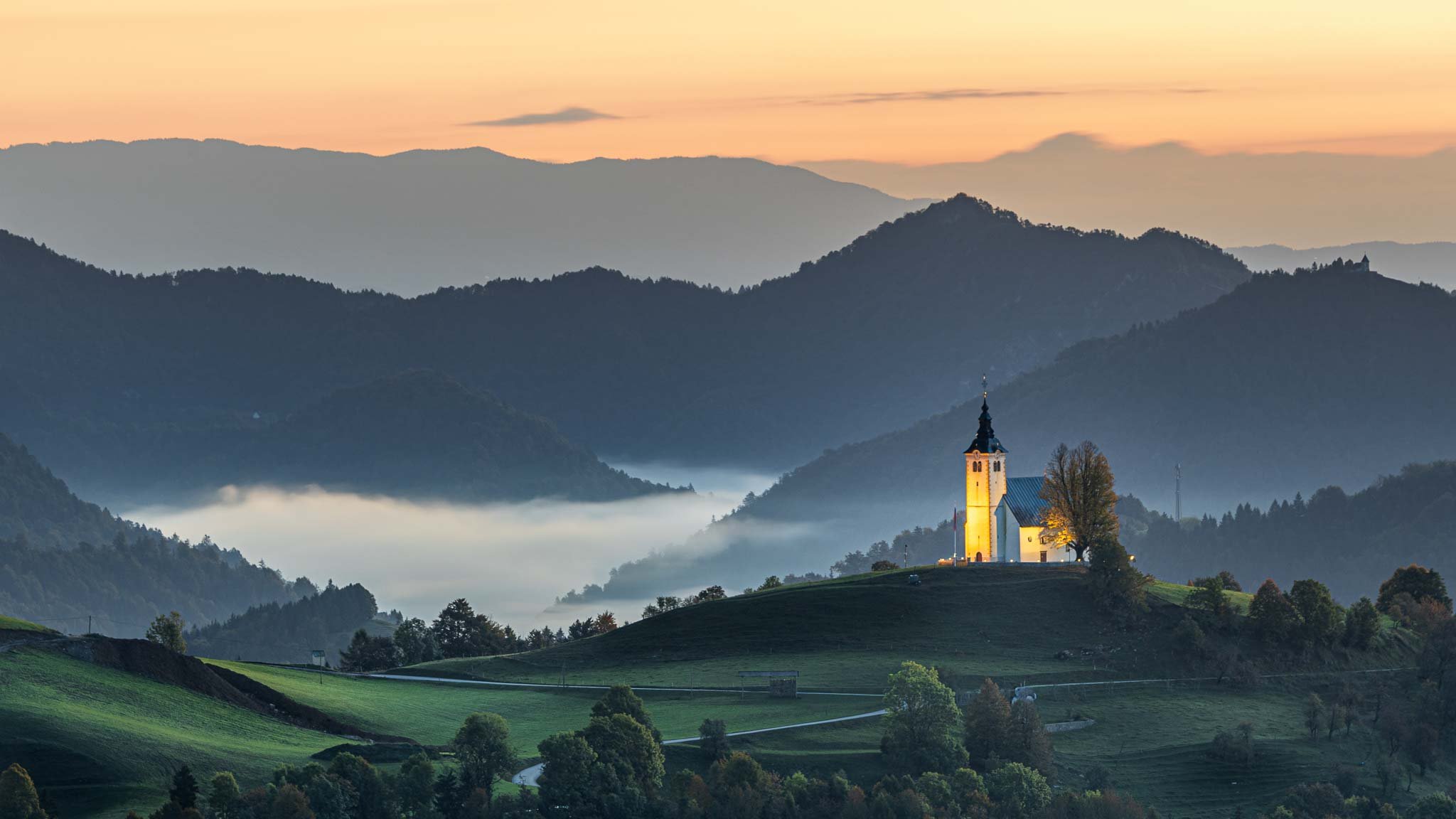
The Church of St. Primus and Felician at Jamnik stands on a grassy ridge, with successive mountain ranges forming its backdrop. The open space around the church makes it a distinctive subject, while changing light and clouds can transform the surrounding landscape.
I photographed this scene at sunrise during my October 2026 visit. The illuminated church stood against darker mountain ridges beneath an orange sky, creating a brief balance between artificial light and the approaching day. Arriving before sunrise gives you time to choose your composition and follow these changes as they unfold.
From the marked viewpoint, use the grassy ridge to lead the eye toward the church. A tighter composition can emphasize the layers of mountains, while a wider view gives more space to the sky and surrounding countryside.
Access: The marked photography point is near the road above the church. Park only where permitted without obstructing traffic or local access. Keep your equipment clear of the road and respect private meadows and fences.
03 — St. Thomas Church, Sveti Tomaž
Recommended time: Early morning, especially
when mist settles in the valleys
Recommended season: Autumn for seasonal
color and atmospheric conditions
Location : View on Google Maps
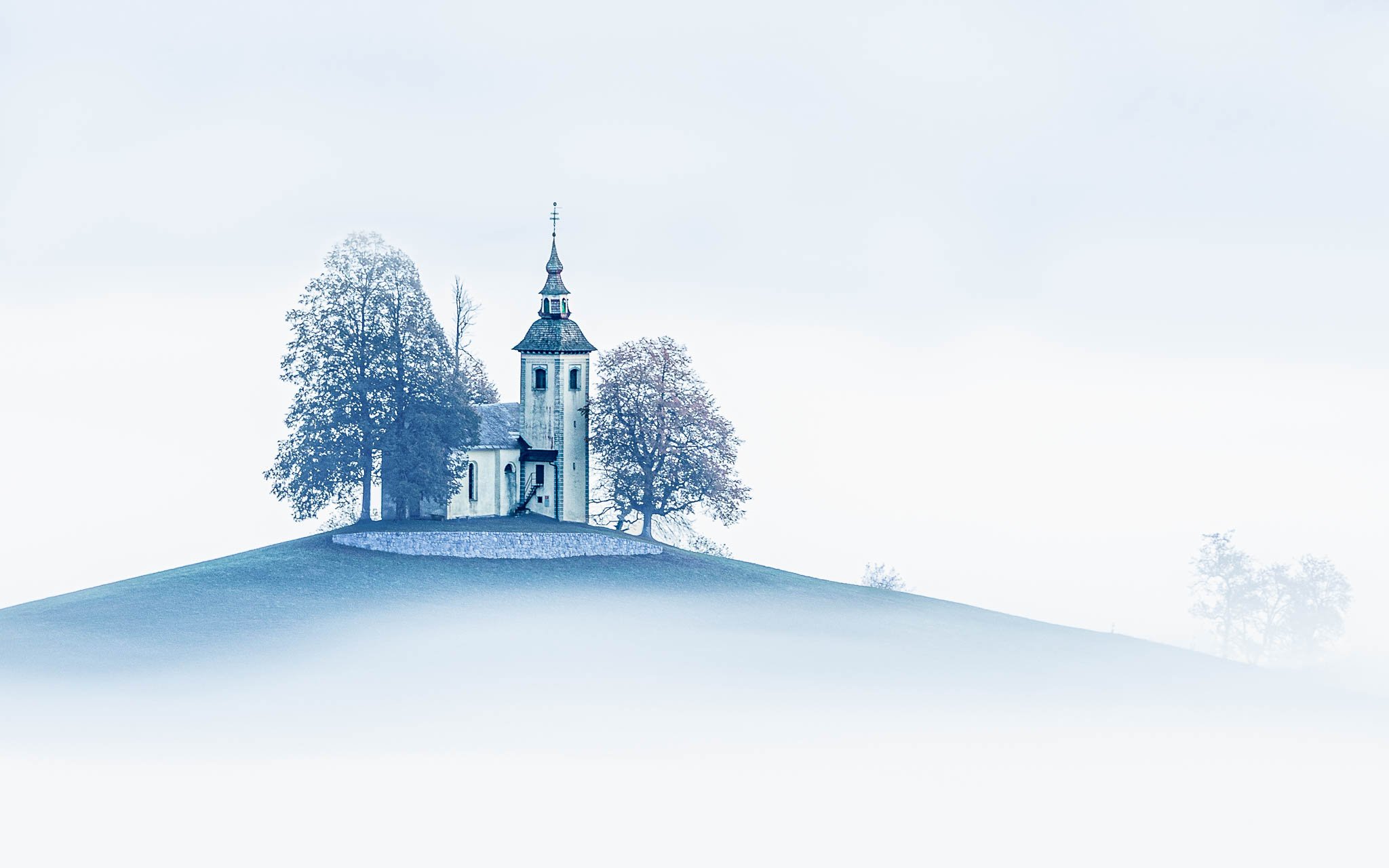
St. Thomas Church stands on a small hill above Praprotno, surrounded by trees and rolling countryside. Viewed from a distance, the church becomes a focal point within a much larger landscape, with its appearance changing as mist reveals or conceals the surrounding slopes.
During my visit, fog simplified the scene, leaving the church and nearby trees suspended above a soft white foreground. These conditions offered an opportunity to explore a quieter composition, using open space and subtle tones rather than filling the frame with detail.
A telephoto lens helps isolate the church from this distant viewpoint. Allow space around the hill and watch the edges of the fog: small changes can reveal trees, separate the church from its surroundings or hide the subject altogether.
Access: The map marks a distant photography viewpoint rather than the church itself. Check parking locally, avoid obstructing the narrow road and respect private land when choosing your position.
04 — Heart-Shaped Road, Špičnik
Recommended time: Late afternoon for the
vineyards; twilight for vehicle light trails
Recommended season: Autumn for changing
vineyard colors
Location : View on Google Maps
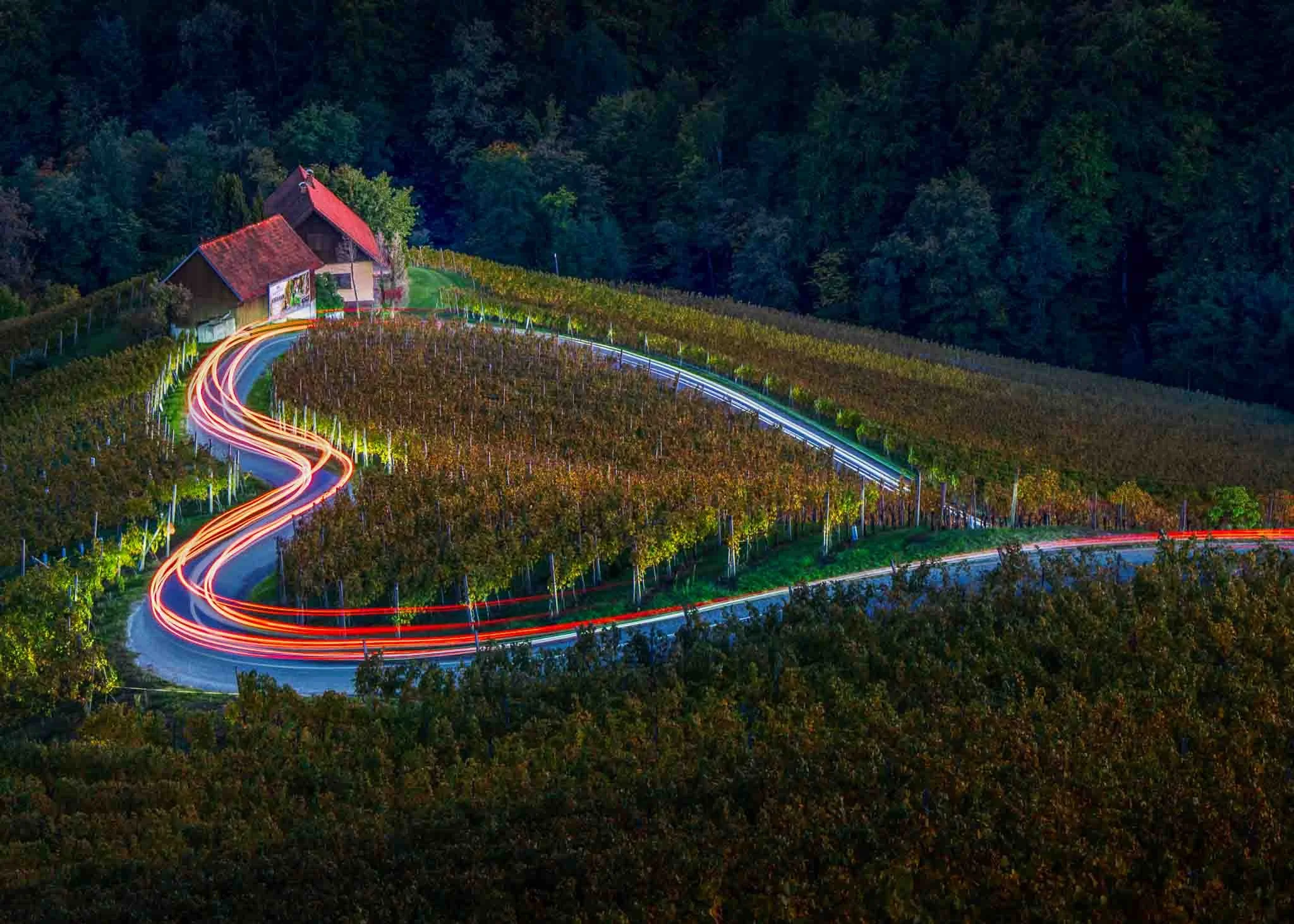
At Špičnik, near Slovenia’s border with Austria, a winding road forms a heart shape among the vineyards. From the elevated viewpoint, the road and rows of vines create a composition built around curves, repetition and the contours of the hillside.
In my photograph, red and white vehicle light trails trace the road through the darker landscape, emphasizing its distinctive shape. Photographing around twilight allows the surrounding vineyards to remain visible while the vehicle lights become more prominent.
Set up your composition while there is still enough light to see the hillside clearly. A tripod and a longer exposure can capture passing vehicles, although the result depends on their direction, speed and timing.
Access: The familiar viewpoint is on a working wine estate. Ask the hosts for permission before setting up, and check current visiting hours and any access fee, particularly if you intend to photograph around twilight. Respect the vines and keep visitor routes clear.
05 — Mangart Saddle, Julian Alps
Recommended time: Sunrise or sunset, when
weather and access conditions allow
Recommended season: Early to mid-autumn,
before snow restricts access
Location : View on Google Maps
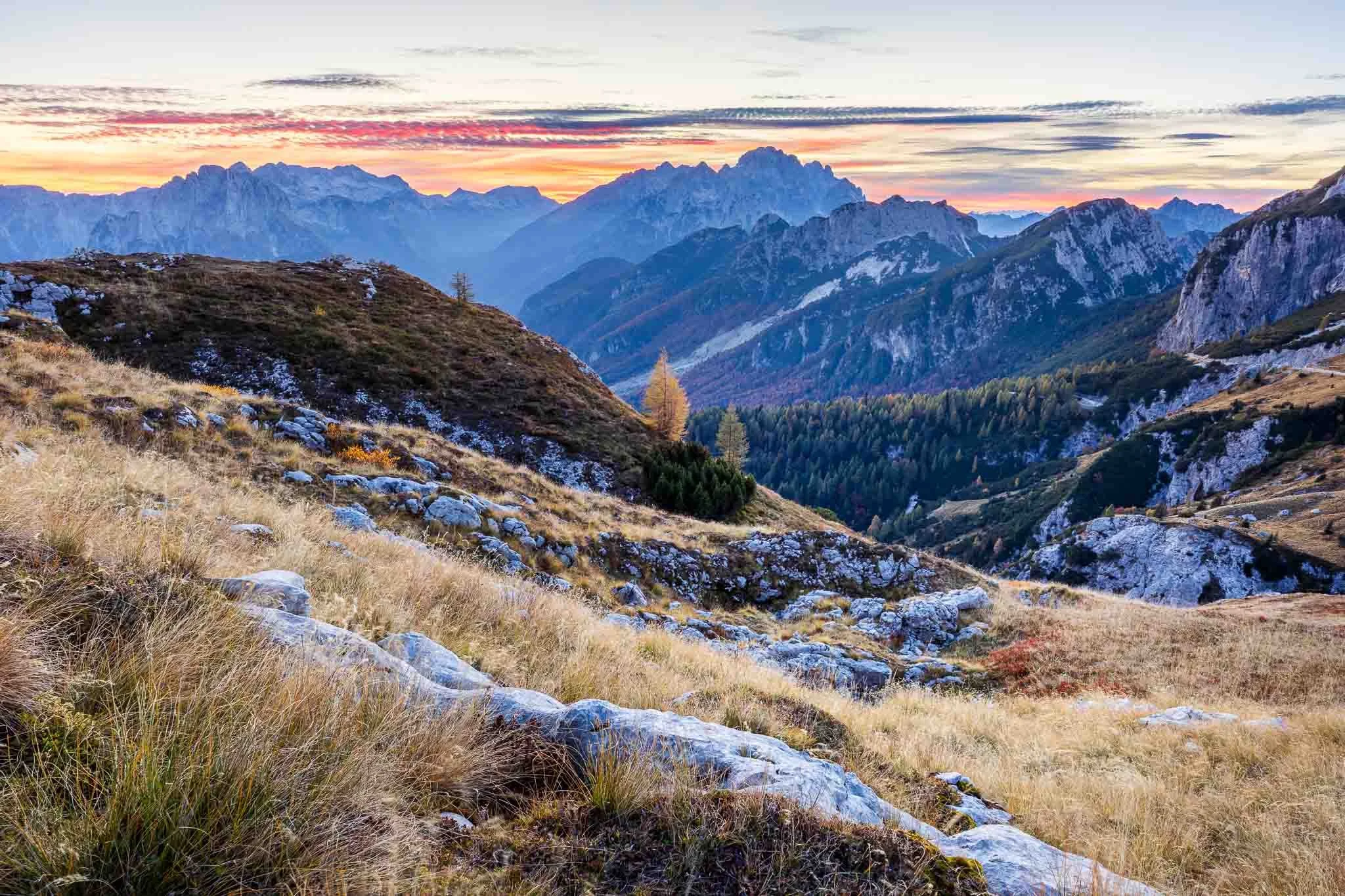
The landscape around Mangart Saddle offers a different perspective on Slovenia’s autumn scenery. Here, rocky slopes, alpine grass and overlapping mountain ridges replace the lakes, vineyards and wooded hills found elsewhere in this guide.
In my photograph, textured rocks and pale grass anchor the foreground, while successive ridges lead toward a softly colored sky. The contrast between the detailed foreground and distant blue mountains gives the scene depth without relying on a single dominant landmark.
Look for foreground shapes that connect naturally with the mountains beyond. A wide-angle lens can emphasize this relationship, but take care to keep the distant peaks prominent enough to hold the composition.
Access: The Mangart Road is narrow, exposed in places and subject to seasonal closures, capacity limits and an environmental fee. Check current road conditions before travelling, particularly in autumn when snow or ice may affect access. Use designated parking and follow all barriers and local restrictions.
Safety notice: Mountain weather can change quickly. Bring warm layers and suitable footwear, remain on established paths and avoid exposed terrain in poor visibility or icy conditions.Frequently Asked Questions
06 — Piran Old Town from the City Walls
Recommended time: Sunset and blue hour
Recommended season: Autumn for evening light
and changing skies
Location : View on Google Maps
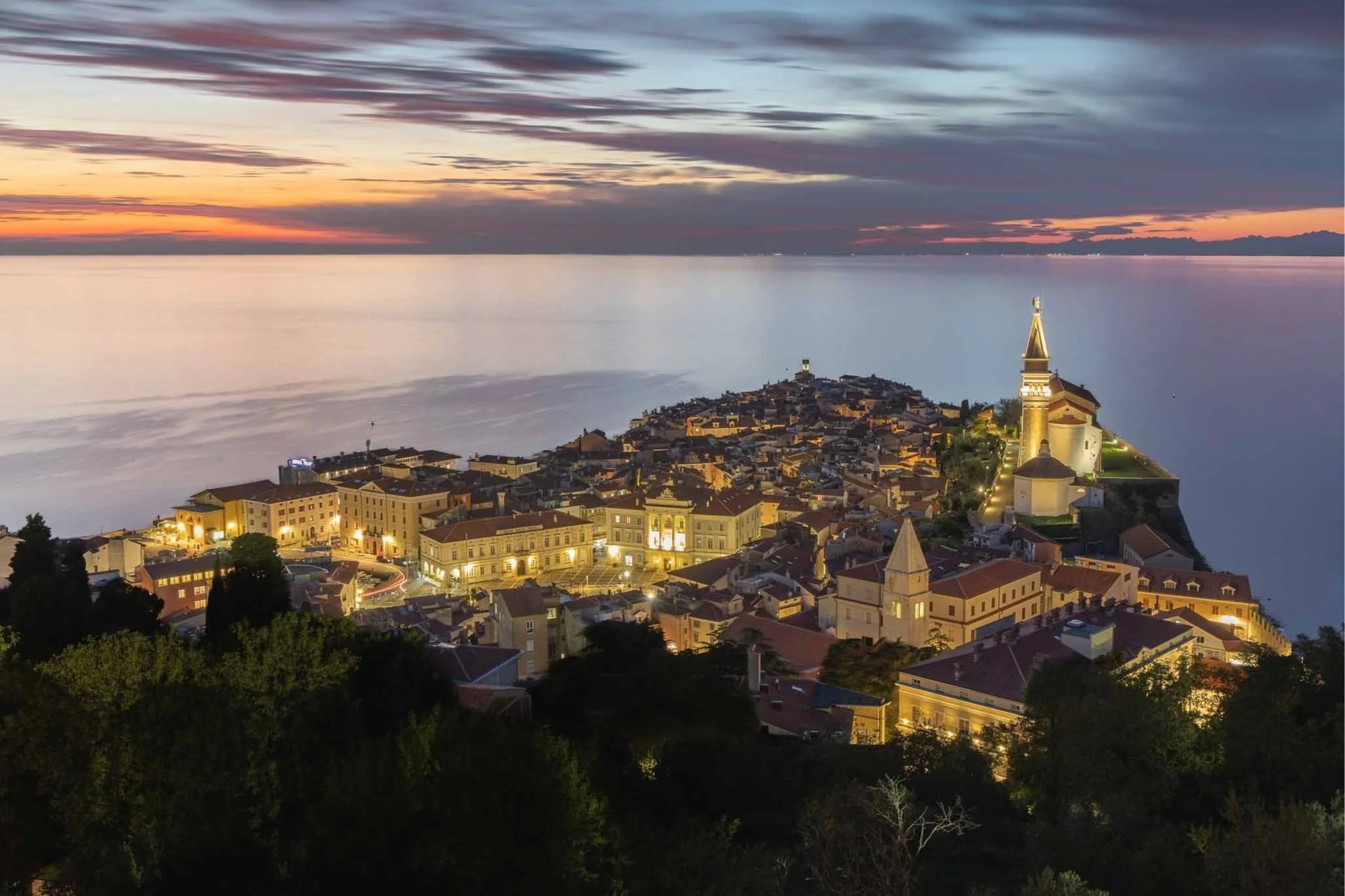
From Piran’s city walls, the old town stretches toward the Adriatic Sea, its closely packed rooftops leading to the prominent bell tower of St. George’s Church. The elevated viewpoint brings architecture, coastline and open water together in a single composition.
In my photograph, warm town lights stand against the cooler sea beneath a band of sunset color. Staying through the transition into blue hour offers different balances between the remaining daylight and the illuminated buildings.
Allow enough space around the peninsula to preserve its shape against the water. Watch the brightness of the sky and town lights as the light fades, and adjust your exposure to retain detail in both.
Access: Reach the city walls on foot from the old town via uphill streets and steps. Check current opening hours and admission arrangements before planning a sunset visit, as access to the viewpoint depends on the site being open.
07 — Škofja Loka Riverside
Recommended time: Morning or late afternoon
;overcast conditions can soften contrasts
Recommended season: Autumn for foliage along
the river
Location : View on Google Maps
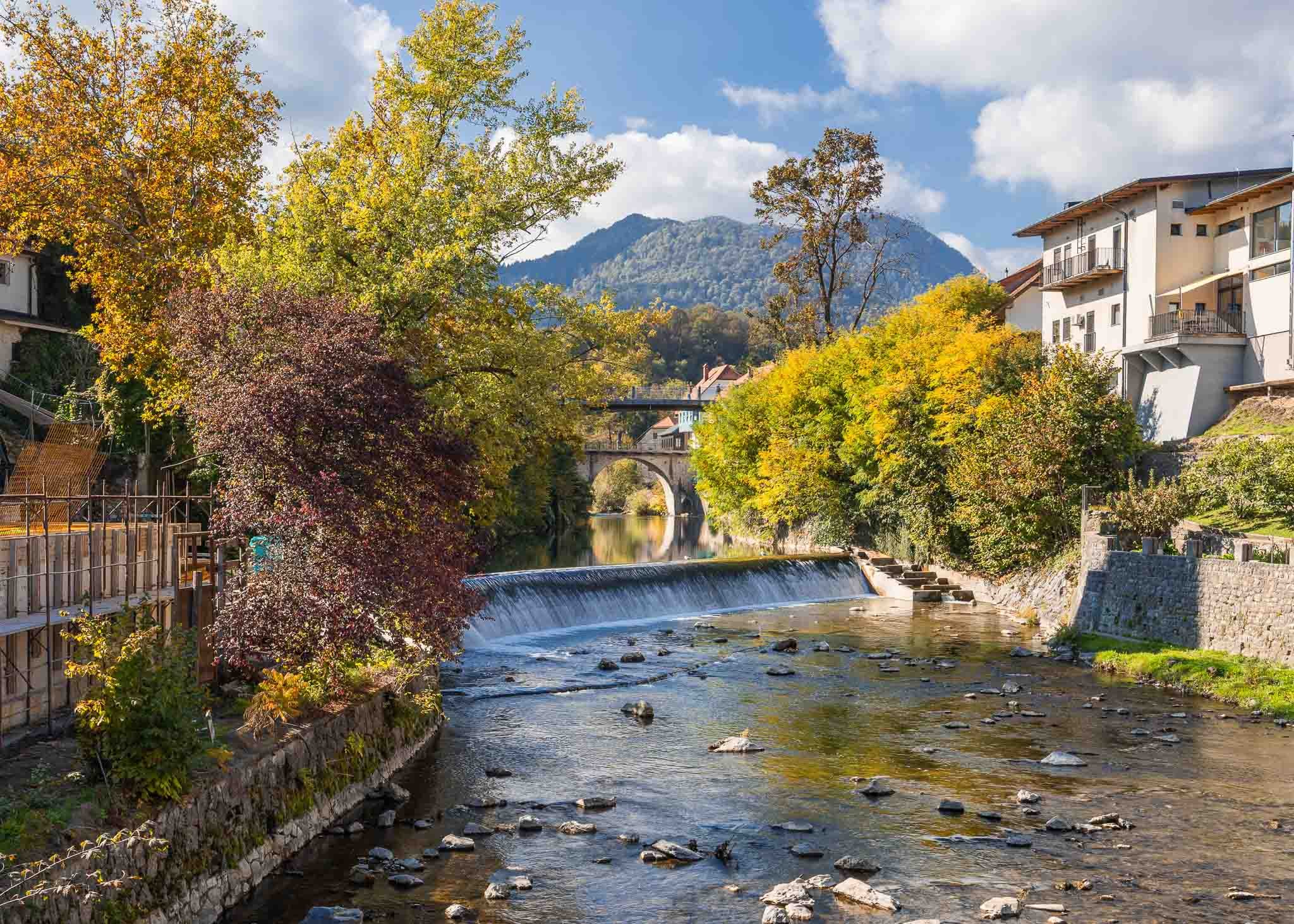
Škofja Loka offers a quieter meeting point between architecture and landscape. Along the Selška Sora River, old buildings, stone bridges and riverside trees create compositions where the town becomes part of its natural surroundings.
In my photograph, the river leads toward a stone arch bridge, framed by autumn foliage and buildings along the bank. The water provides depth and movement, while the bridge gives the scene a clear focal point.
Explore how the river connects the foreground to the bridge. Small changes in position can help separate the arch from nearby branches and buildings. Softer light can make it easier to retain detail in both the shaded water and brighter façades.
Access: The Google Maps link marks Šeširski most as a reference for the riverside area, rather than the exact camera position. Explore the surrounding public streets and paths on foot, respecting private property and keeping pedestrian routes clear.
Frequently Asked Questions
When is the best time to photograph autumn in Slovenia?
October is a rewarding month for autumn foliage, vineyard colors and misty landscapes. The photographs in this guide were taken during my October 2026 visit. Seasonal color varies with elevation and weather, while snow can restrict access to mountain locations earlier than expected.
What is the best time of day for these photography locations?
Early morning is particularly rewarding at Lake Bled, Jamnik and St. Thomas Church, especially when mist settles in the valleys. Sunset and blue hour suit Piran, while twilight offers opportunities for vehicle light trails at Špičnik. In Škofja Loka, softer morning, afternoon or overcast light can help balance the river and surrounding buildings.
Are exact photography locations included in this guide?
Each location includes a Google Maps link identifying a viewpoint or reference area. The pins do not necessarily mark parking, an entrance or the exact camera position. Read the individual access notes and check local signs before choosing your route.
Do these locations require hiking?
Walking requirements vary. The guide includes lakeside paths, roadside viewpoints, uphill town streets and mountain terrain. Piran’s city walls involve steps, while the Mangart area requires particular attention to weather and access conditions. Check each location’s access notes before visiting.
What equipment is useful for photographing these locations?
A wide-angle or standard zoom works well for lakes, mountain landscapes and riverside scenes. A telephoto lens helps isolate distant churches and layers of hills. A tripod is useful for dawn, twilight and longer exposures, where permitted and without obstructing other visitors.
Is access available throughout autumn?
Access depends on the location and conditions. Mangart Road is subject to seasonal closures and other restrictions. Piran’s city walls have opening hours, and the viewpoint at Špičnik has visiting arrangements. Check current information before travelling, particularly when planning an early morning or evening session.
Explore my Slovenia Landscape Photography collection for more photographs from this autumn journey.
