Steel Wrecks: Abandoned wrecks Through Photography
Steel Wrecks -
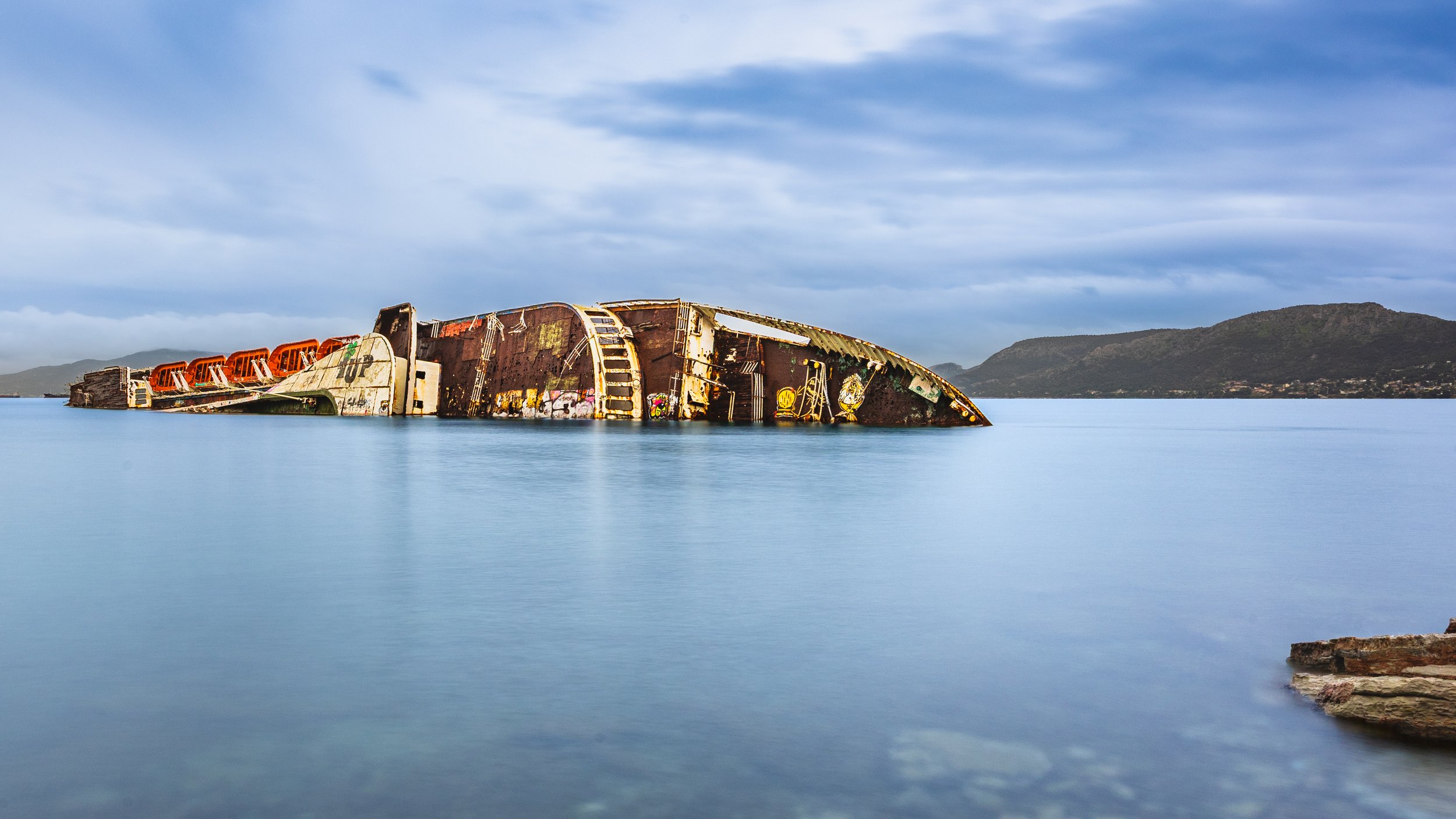
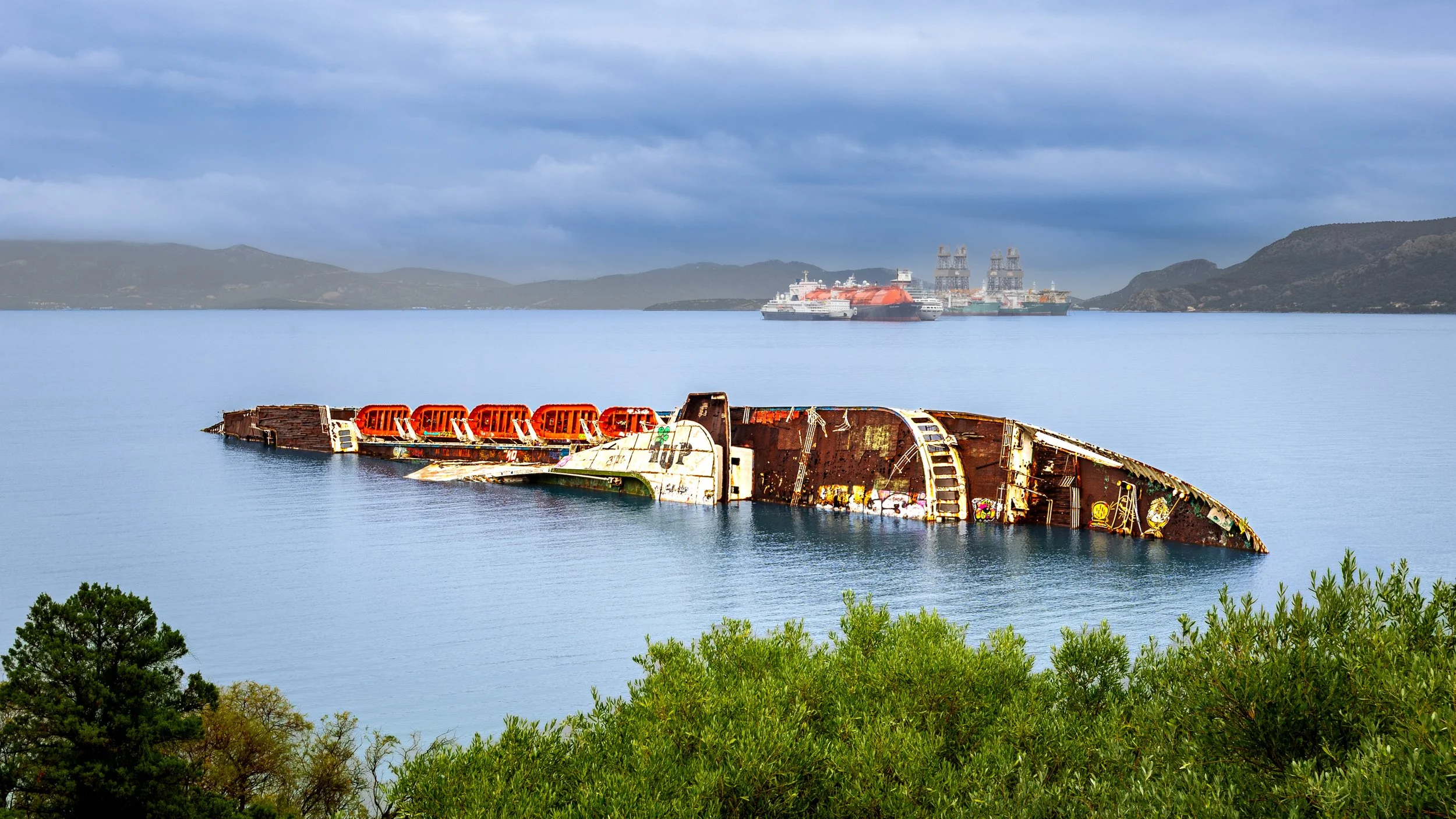
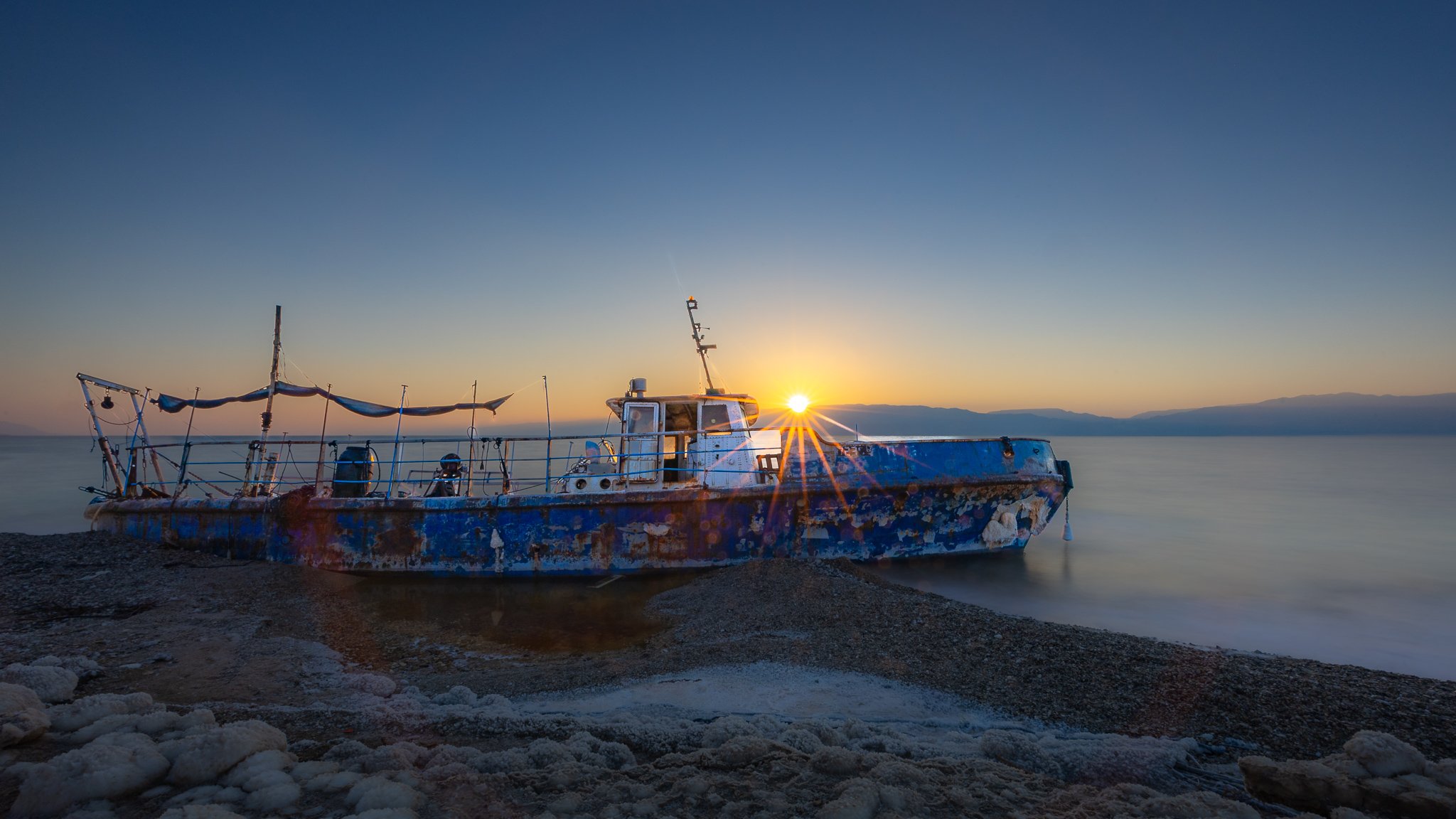
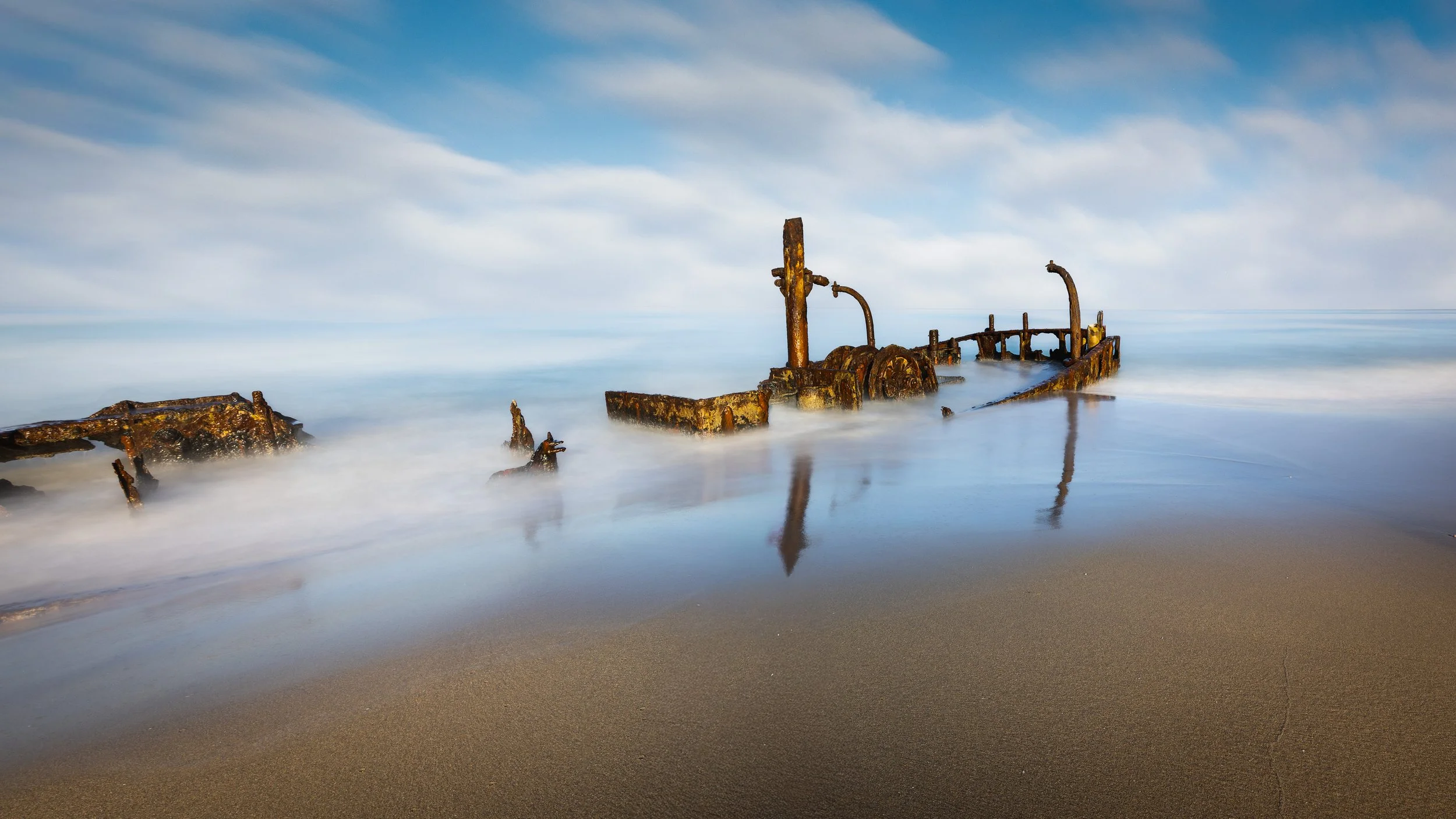
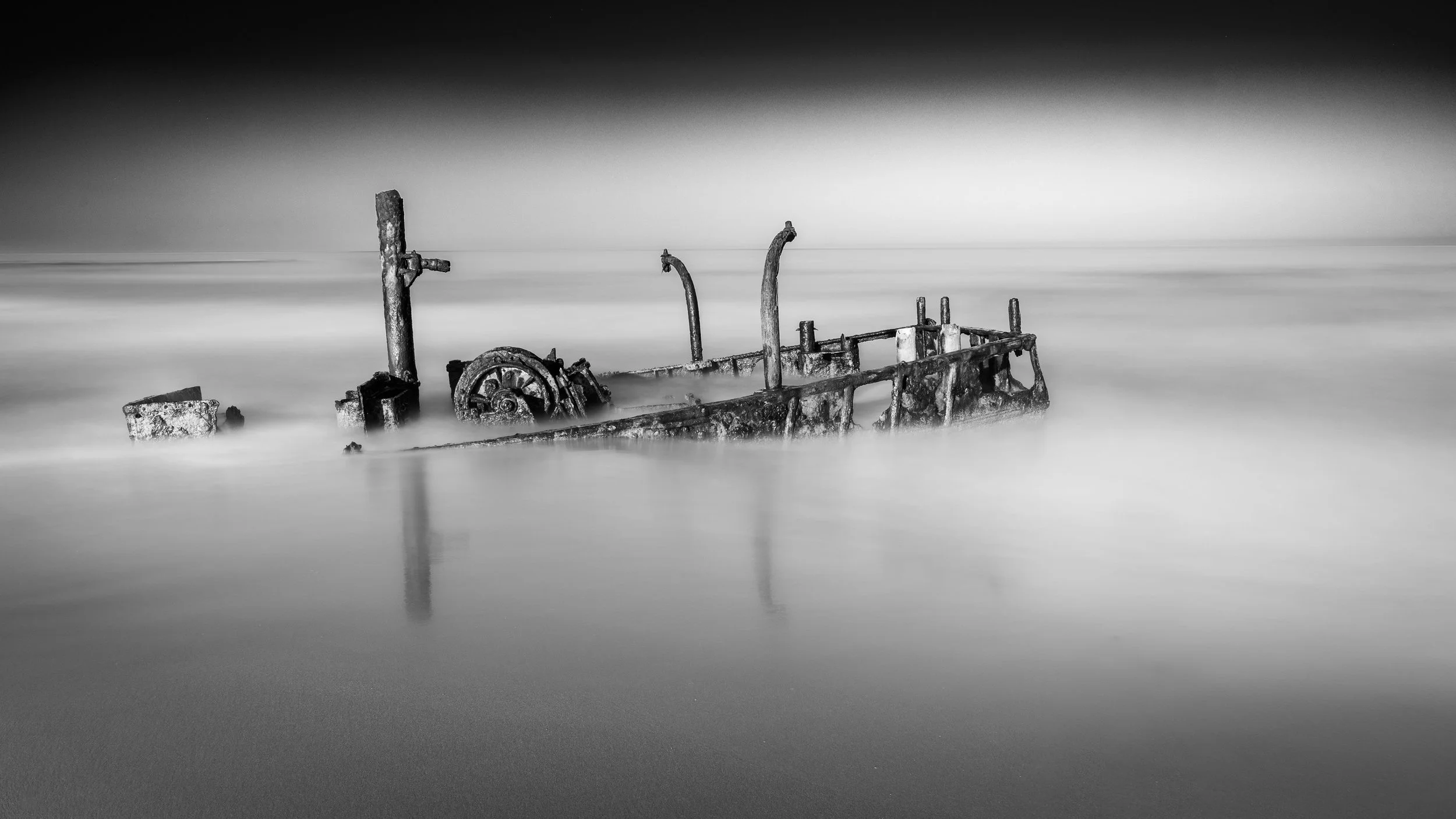
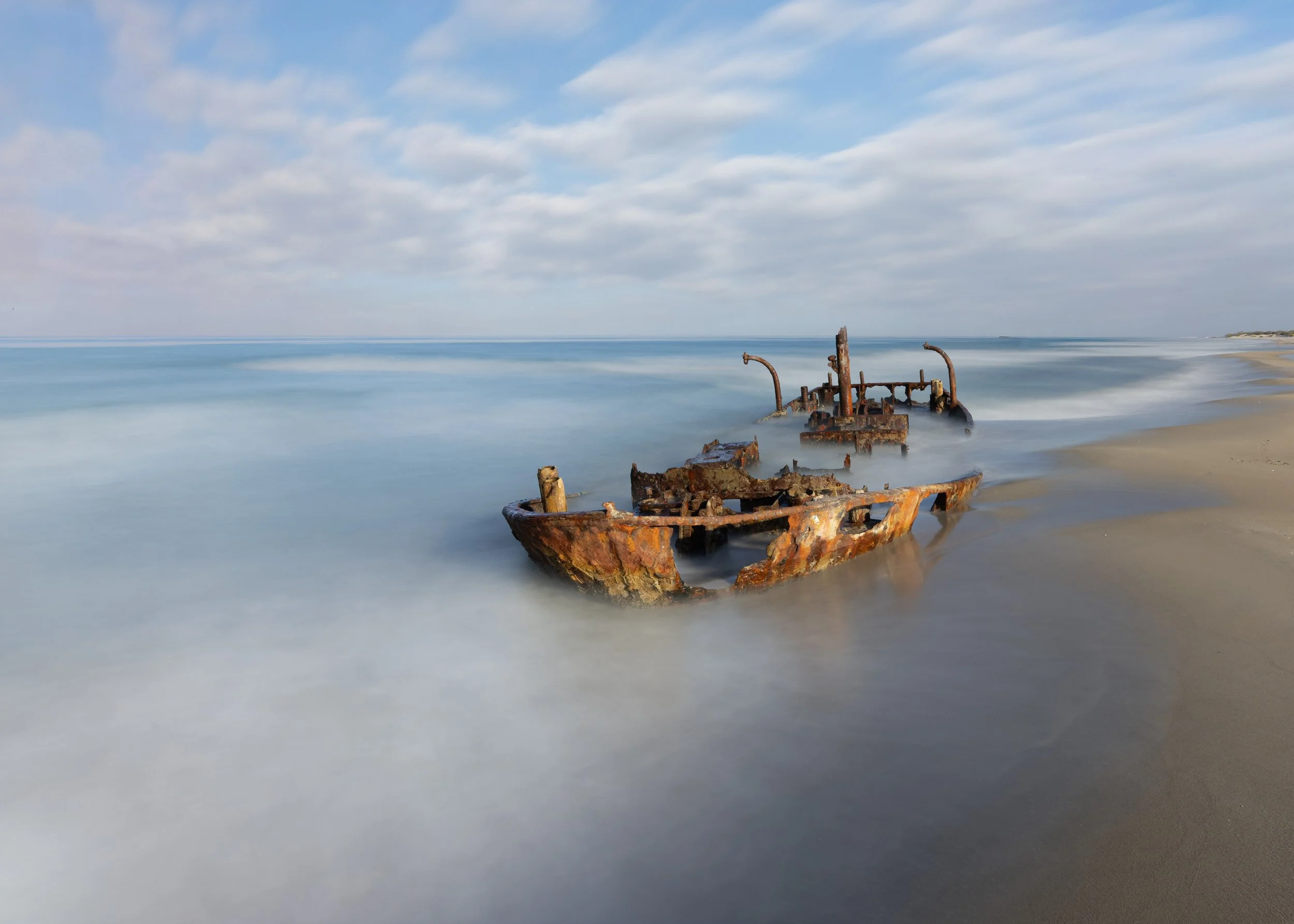
Is a fine art theme series documenting abandoned and partially submerged shipwrecks through long exposure coastal photography.
Once built for motion and function, these structures now rest in quiet suspension between decay and permanence.
Softened water and minimal horizons emphasize stillness, time, and the gradual transformation of human-made forms into part of the seascape
-
The Steel Wrecks Series explores the quiet afterlife of industry — where massive structures once built for movement, power, and purpose now rest in stillness. These vessels, slowly reclaimed by sea and time, become monuments to impermanence. Rust replaces paint, silence replaces machinery, and the ocean reshapes what human hands once engineered.
Through long exposure and controlled composition, the water softens into a calm surface, contrasting with the raw textures of corroded steel. This tension between strength and decay forms the emotional core of the series. What was once dynamic and functional is transformed into sculptural presence — fragile yet enduring.
Minimal horizons and open skies emphasize isolation. The wrecks appear suspended between past and present, between collapse and persistence. Their forms are no longer defined by utility but by character: fractured lines, exposed ribs, weathered surfaces marked by salt and wind.
Color and monochrome interpretations shift the narrative. In color, oxidation and layered tones speak of erosion and time. In black and white, the images become more austere, focusing on structure, contrast, and atmosphere.
Steel Wrecks is not about destruction. It is about transition — about how nature absorbs, reshapes, and ultimately reclaims. These remnants stand as quiet witnesses to human ambition, now resting in dialogue with horizon, tide, and sky.
These images are not about the object itself, but about the emotional space it holds. The horizon represents possibility, the sky suggests movement and change, while the stillness of the bench anchors the composition in calm restraint. Through variations of light, atmosphere, and tonal treatment, the series moves between realism and introspection, between documentary presence and fine-art interpretation.
Minimalism plays a central role. The clean geometry of the bench contrasts with the organic textures of earth, clouds, and water. This visual simplicity allows silence to become the dominant subject. The absence of visible narrative encourages personal projection — each viewer may imagine who sat there, who left, or who might arrive next.
Working often with long exposure and carefully balanced light, I aim to soften distractions and emphasize mood. The result is a body of work that feels timeless, suspended between moment and memory.
The Silent Bench is not merely a location; it is a state of mind — a quiet space where time slows, thoughts expand, and silence speaks.